

UTI: midstream urine and the humble dipstick
Why is a 75-year-old test still shaping women’s UTI diagnoses?
Guest blog by Giovanna Forte, CEO of Forte Medical Limited, innovator behind precision urine specimen collection.
A technology designed in the 1950s to give clinicians a quick approximation at the bedside has, over decades, drifted into use as a quasi-definitive screening test in populations where its accuracy was never actually validated for that job.
The urine dipstick feels like a fixture of modern medicine. A slender strip is dipped into a collection vessel to absorb the urine sample, and seconds later the results are read against a colour chart. But its lineage stretches back further than most people realise, and understanding that history helps explain both its enduring usefulness and its very real limitations.
The urine dipstick’s roots lie in the mid-19th century. The first test strips were created by French chemist Jules Maumené in 1850, primarily to detect sugar in the urine of people with diabetes. The modern dip-and-read strip followed in the 1950s, with further reagent pads, including nitrite and leukocytes, added in later decades.
Urine dipsticks are still used today, to test for:
- Glucose: indicates potential diabetes
- Protein: may suggest kidney disease
- Ketones: associated with diabetes or starvation
- Nitrites: can indicate urinary tract infections
- Leukocytes: suggests possible infection
- pH Levels: helps assess kidney function and risk of kidney stones.
These tests allow for quick and effective monitoring of a patient’s health, but crucially rely on an uncontaminated urine specimen.
Dipsticks today
Urine dipsticks are increasingly recognised as being less reliable for point-of-care urinary tract infection (UTI) diagnosis, because they show low sensitivity, and cannot distinguish between harmless background bacteria and active infection. They can yield frequent false-positive or false-negative results due to chemical interference, non-nitrate-reducing pathogens, or short bladder incubation times.1
Why midstream is important
International guidelines recommend midstream urine for routine UTI and antenatal screening. This isn’t always easy, as the instructions on the Patient.info website demonstrate, providing clumsy advice around midstream collection, including recommending using a jam jar or disposable plastic cup with the contents then decanted into a “sterile container” if using a normal vessel is too difficult.2,3
The Doctors’ Laboratory is more specific, advising that “Poor collection technique is the most common reason for a heavily mixed growth in a urine sample. It is almost impossible to collect a urine sample without any contamination from the normal bacterial flora which inhabit the area surrounding the urethral opening, but optimal collection technique will minimise this contamination and allow the true infective cause to stand out and be identified.”4
Today, the optimum technique for urine collection can be achieved using Peezy Midstream, the only device to automate midstream urine collection; precision engineering eliminates spillage, promotes hygiene, infection control and patient safety. A system befitting modern medicine.
What actually happens on the strip, and why contamination matters
Each reagent pad on a dipstick relies on a chemical reaction that is sensitive not only to the analyte it is designed to detect, but to a range of other things present in the sample, including extraneous material introduced during collection.
Contamination is the single biggest problem in real-world dipstick performance for women. Because the urethral opening sits close to the vagina and perineal skin, a voided urine sample can pick up epithelial cells, vaginal flora, blood, discharge, or skin bacteria that have nothing to do with what’s happening in the bladder or kidneys. This matters most for two dipstick components: leukocyte esterase and nitrite (the two analytes used as UTI surrogates), and the blood pad, which can register a false positive from menstrual contamination or vaginal spotting rather than hematuria.
Does a “precision” midstream specimen actually fix the mixed growth problem?
The dipstick reacts to whatever chemistry is present in the collection vessel and it will struggle to distinguish contaminating cells and bacteria from clinically significant ones. If a positive reading emerges (even from a contaminated urine specimen) empirical prescribing is recommended, which can fuel unnecessary antibiotic use and AMR in women.
So, the intuitive answer is yes and clinical teaching has repeated the midstream, “clean-catch” instruction (start to pee discarding the first void into the loo, stop, position the tube or cup provided under the body then start again and capture midstream). This hit-and-miss system has been recommended for decades on the premise that it reduces contamination but relies entirely on patient dexterity and a strong pelvic floor.
Peezy Midstream automates the work with gold-standard results; it has a solid evidence-base to demonstrate reduced contamination and mixed growth. Better for women, better for GPs, better for labs – and better for dipsticks as long as they are used.
Implications for point-of-care women’s health diagnosis
The author has struggled to find any studies examining point of care dipstick analysis in Primary Care or Prenatal Settings. However, studies relating to elderly PoC testing for UTI conclude that: Dipsticks yielded limited clinical decision support compared with a symptom-driven approach in this study and were independently associated with excess antibiotics for UTI.5
This matters most where dipsticks are used as stand-alone decision tools, which is common in urgent care, primary care, and emergency settings for suspected UTI. Studies comparing dipstick leukocyte and nitrite against urine culture (the actual reference standard) consistently show wide, and sometimes uncomfortable, gaps: sensitivity for leukocyte esterase has been reported anywhere from roughly 24% to 92% depending on the population under study and with nitrite typically more specific but far less sensitive, since not all UTI-causing organisms produce nitrite. This seems a wide margin for error for such a routine and important test.
In short, a negative dipstick does not reliably rule out infection and a positive dip (especially in an asymptomatic patient) does not reliably confirm it, particularly when the specimen may be contaminated.
The practical implication is that dipsticks work best as a triage tool in patients with a reasonably high likelihood of UTI, where both positive and negative results support lab culture for specific diagnosis and antimicrobial stewardship. High levels of empirical broad-spectrum prescribing are arguably putting women on the front line of antimicrobial resistance (AMR).
What dipsticks mean for UTI diagnoses today
The dipstick remains in widespread use because it is cheap, fast, and viewed as useful as a triage tool, particularly in symptomatic patients or resource-limited settings where culture and lab testing are not readily available. But the history is instructive: a technology designed in the 1950s to give clinicians a quick approximation at the bedside has, over decades, drifted into use as a quasi-definitive screening test in populations where its accuracy was never actually validated for that job.
The current evidence base is pushing practice back toward the dipstick’s original intent: a fast, low-cost tool that flags who may need a confirmatory lab test; it is not so much a replacement for one.
For point-of-care women’s health diagnosis specifically, this means treating a positive or negative dipstick as a prompt for clinical judgment and, where appropriate, culture or quantitative lab testing … but most of all, recognising that current recommended urine specimen collection has high contamination rates, creating a built-in source of error.
Where guideline midstream urine is recommended globally there remains no protocol to ensure its collection, leading to unreliable dipstick results and antibiotic prescribing to tackle infections that already carry 80-90% of antimicrobial resistant bacteria6.
Without the right urine specimen, dipsticks are less likely to produce reliable results.
Without the right urine specimen, lab culture cannot always identify problem bacteria.
Without the right urine specimen, high levels of antimicrobial resistance can only increase in women.
The answer? Make midstream mainstream.
Forte Medical, the specimen collection company makes Peezy Midstream. Peezy Midstream is distributed in the UK by Una Health and is available through NHS Supply Chain.
© Giovanna Forte 2026
The Author is CEO of Forte Medical Limited, innovator behind precision urine specimen collection.
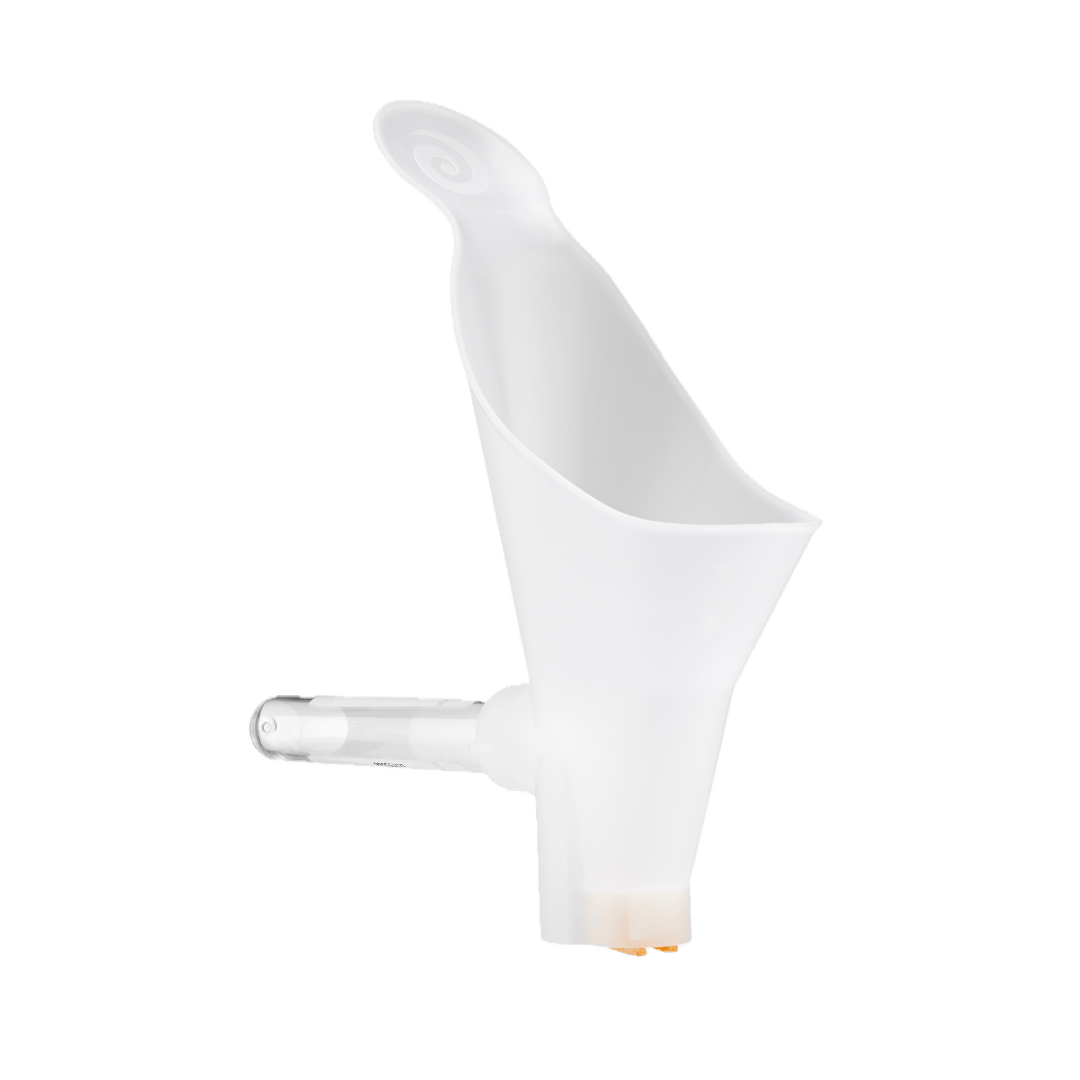
Peezy Midstream
Now available from NHS Supply Chain
Further reading:
- Diagnostic accuracy of dipsticks for urinary tract infections in acutely hospitalised patients
- UTI in the elderly urine dipstick does not seem to be an appropriate tool …
- What is Leukocyte Esterase? Midstream urine specimen recommended
Sources
- https://bpac.org.nz/bt/2013/june/urine-tests.aspx
- https://www.nice.org.uk/guidance/ng109/chapter/Recommendations#treatment-for-women-with-lower-uti-who-are-not-pregnant
- https://patient.info/mens-health/urine-infection-in-men/midstream-specimen-of-urine-msu
- https://www.tdlpathology.com/specialties/microbiologyinfection-sciences/urine-culture-processing-and-results/
- https://pubmed.ncbi.nlm.nih.gov/38997149/
- https://www.scientificamerican.com/article/antibiotic-resistant-utis-are-common-and-other-infections-may-soon-be-resistant-too/
